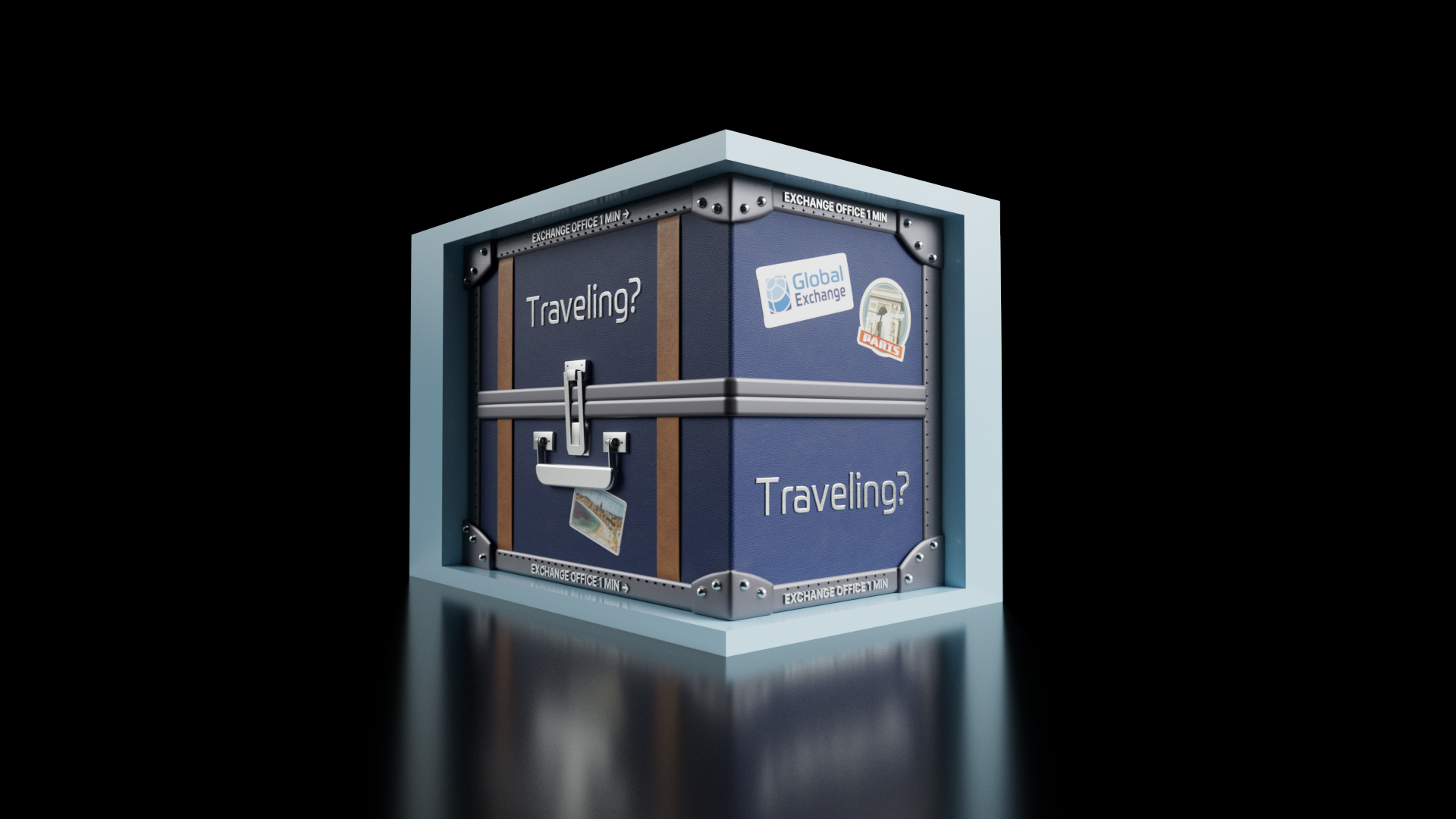
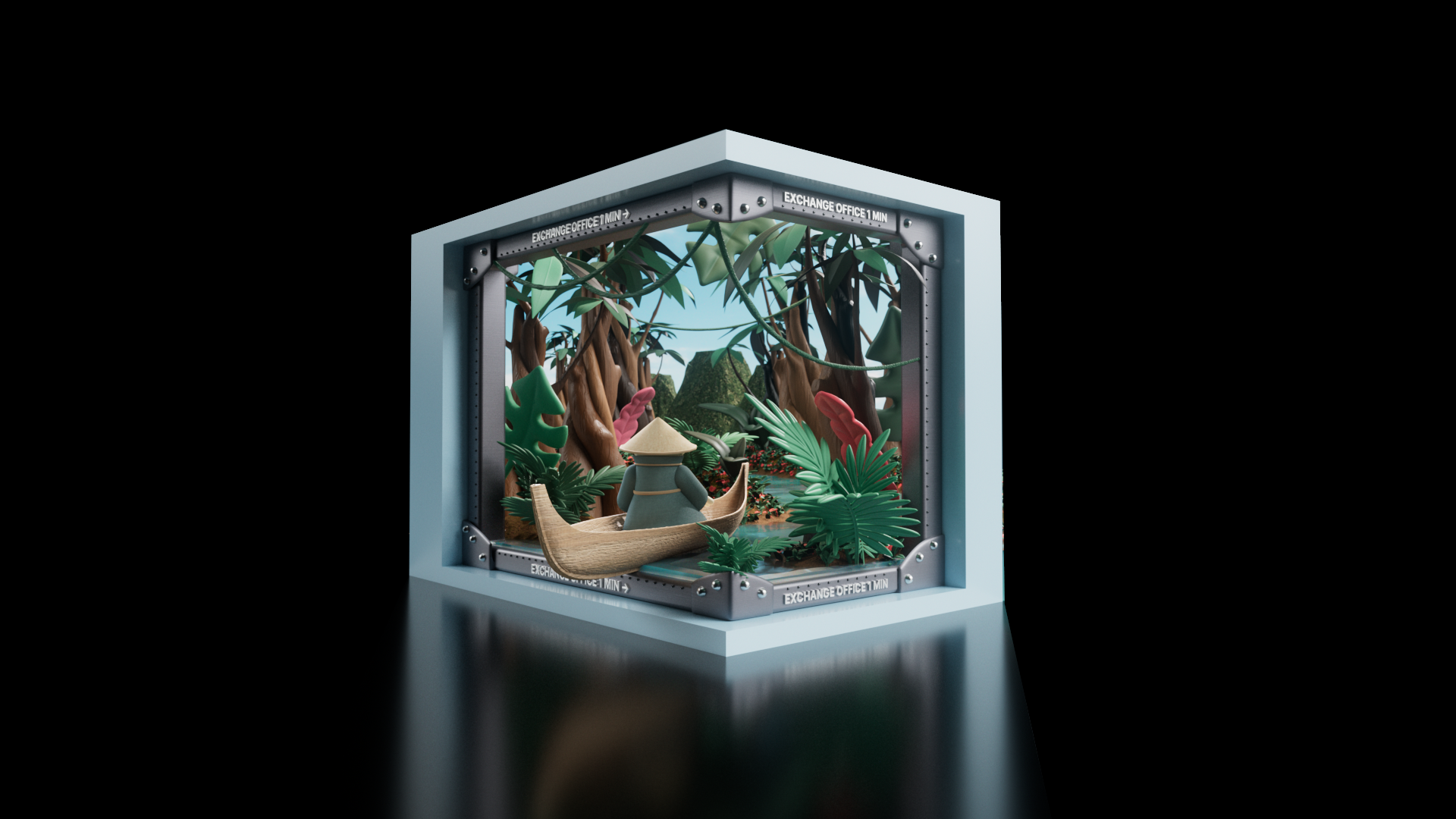
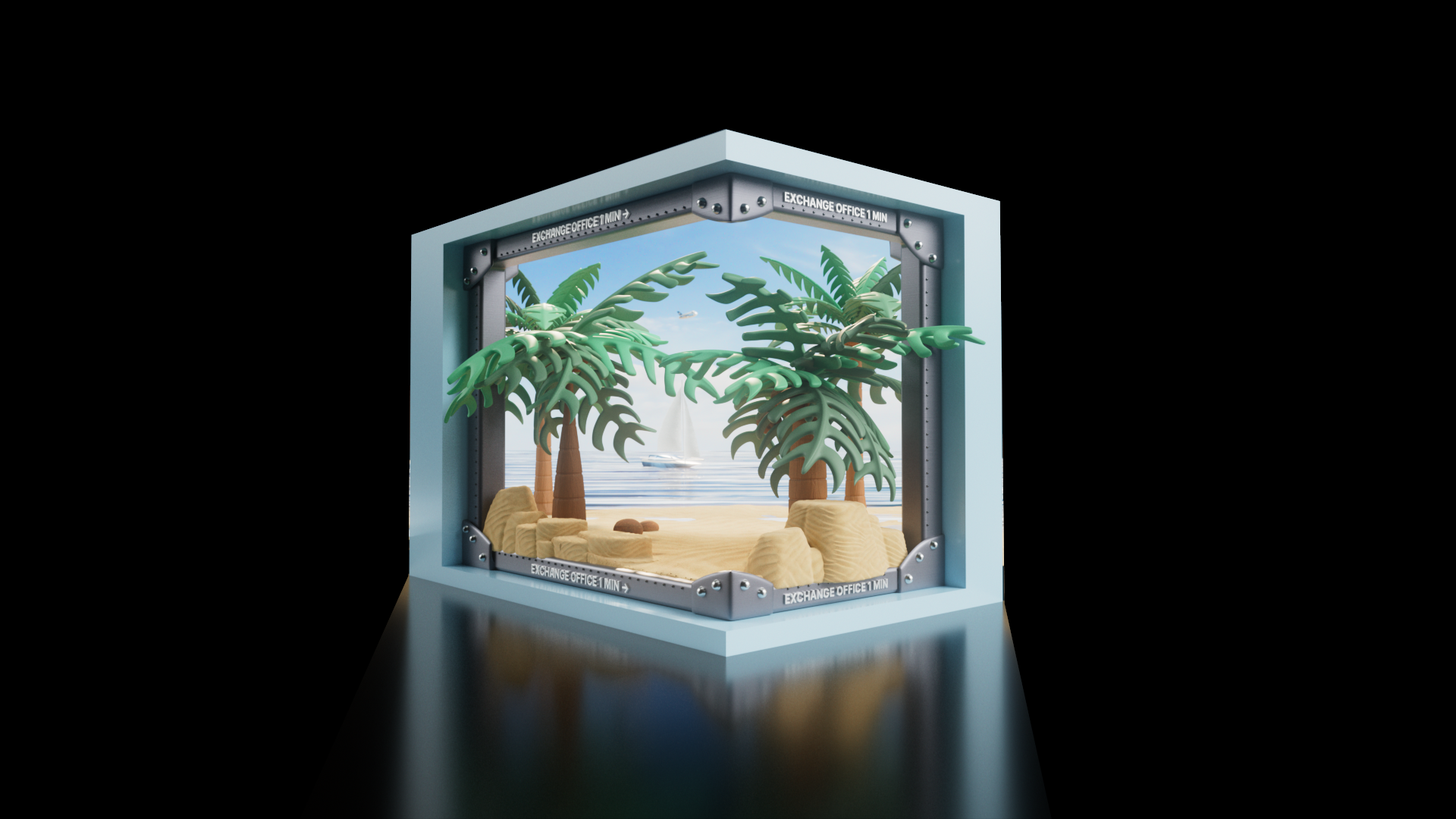
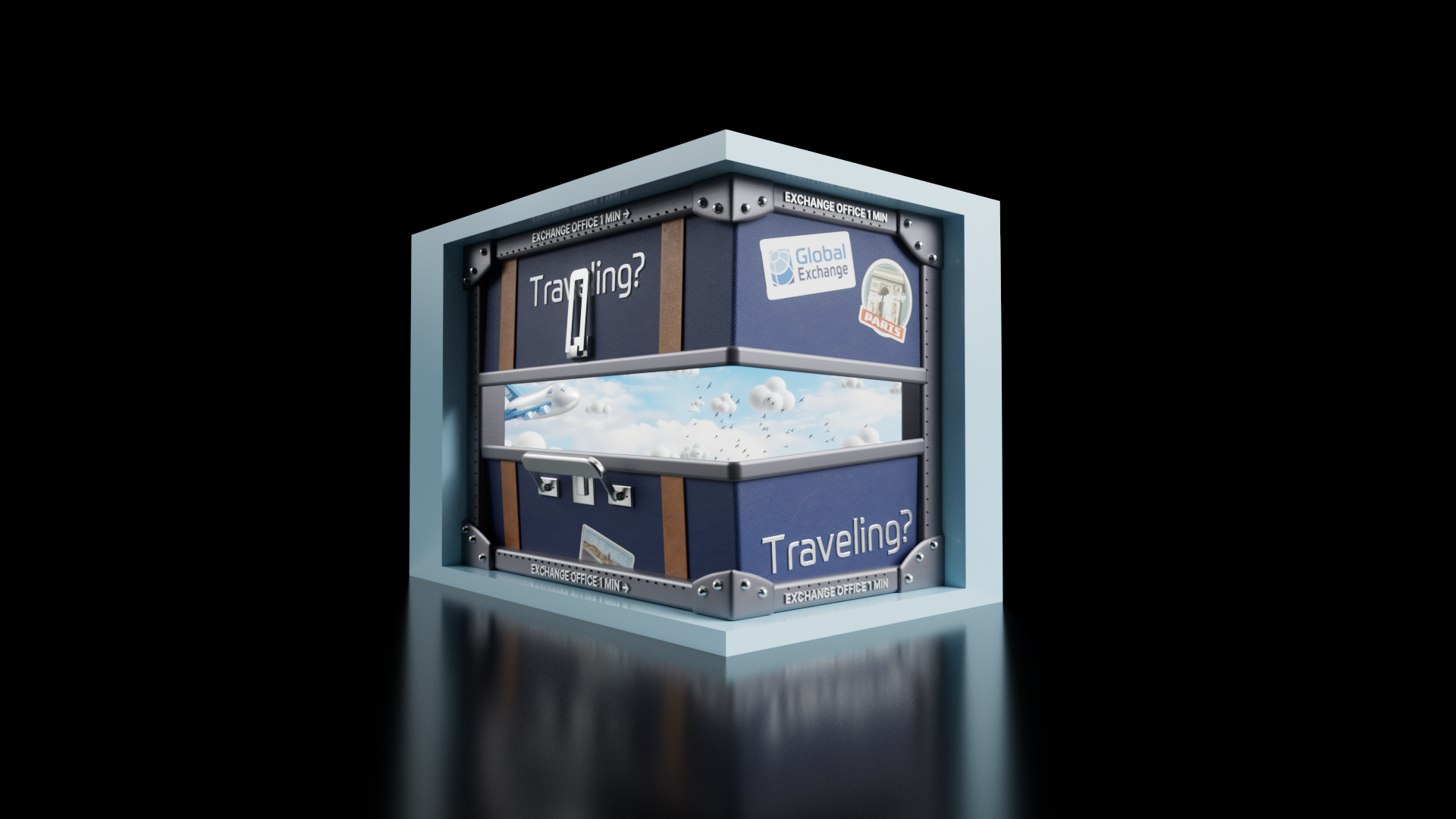
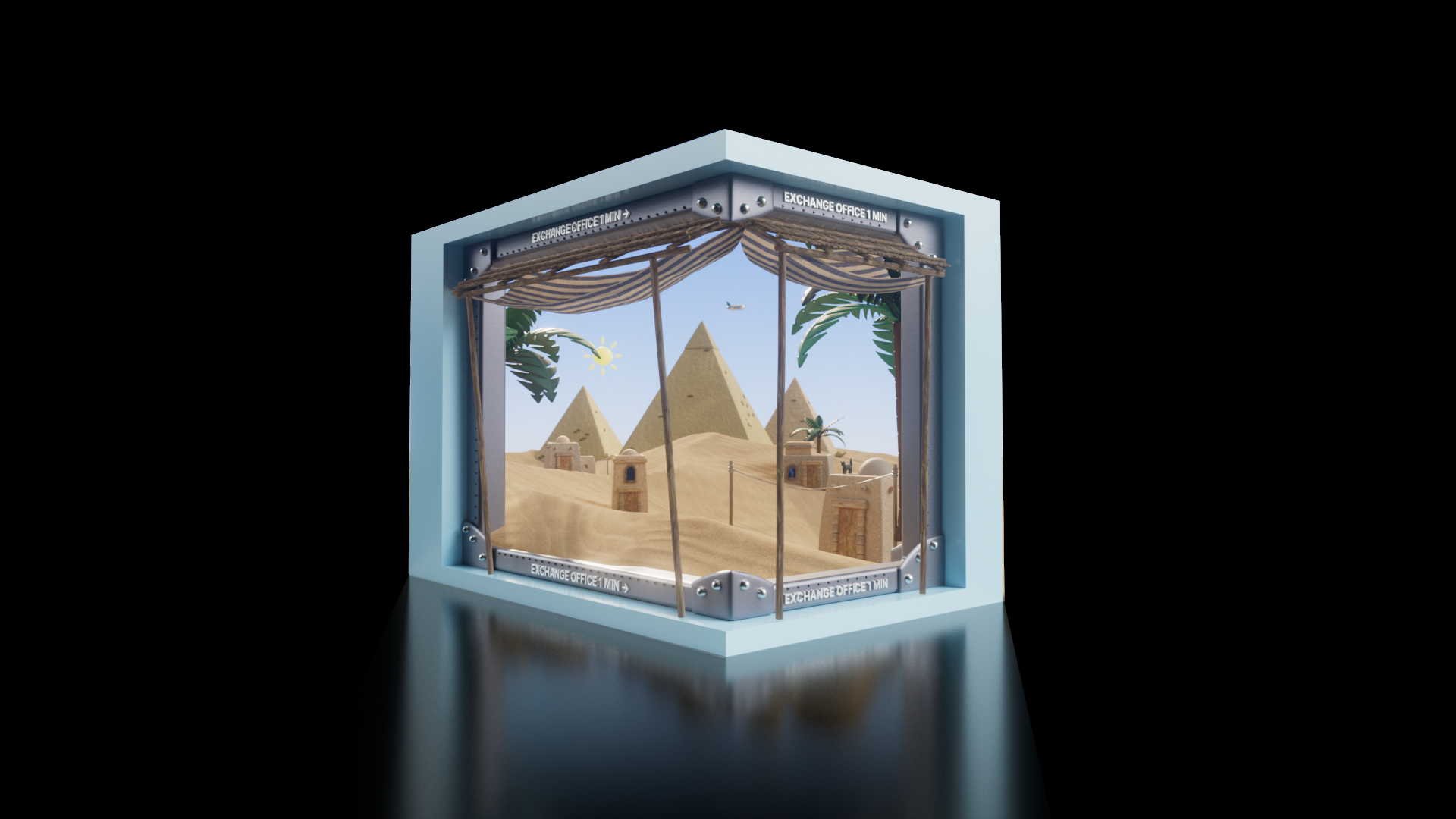
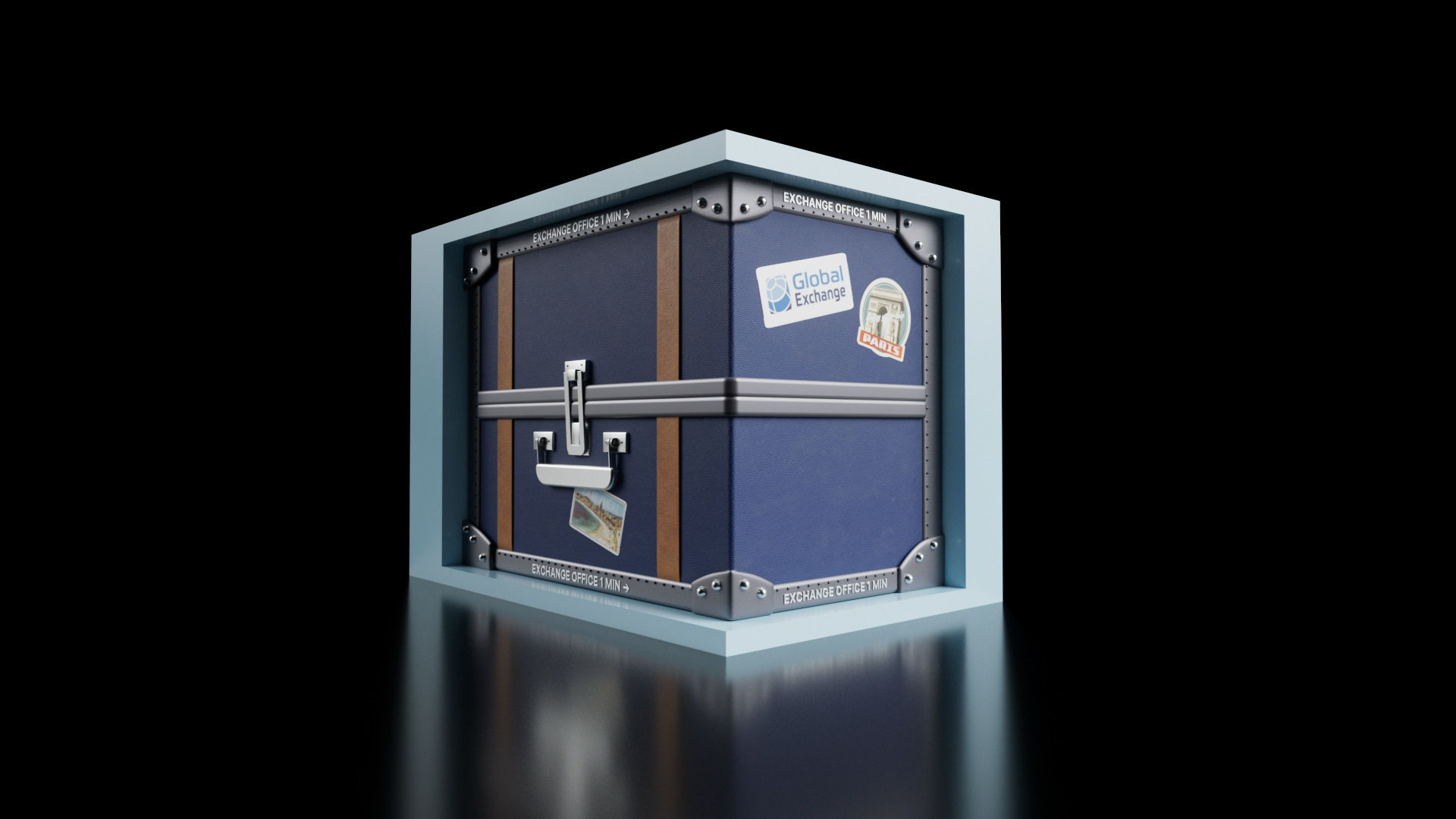
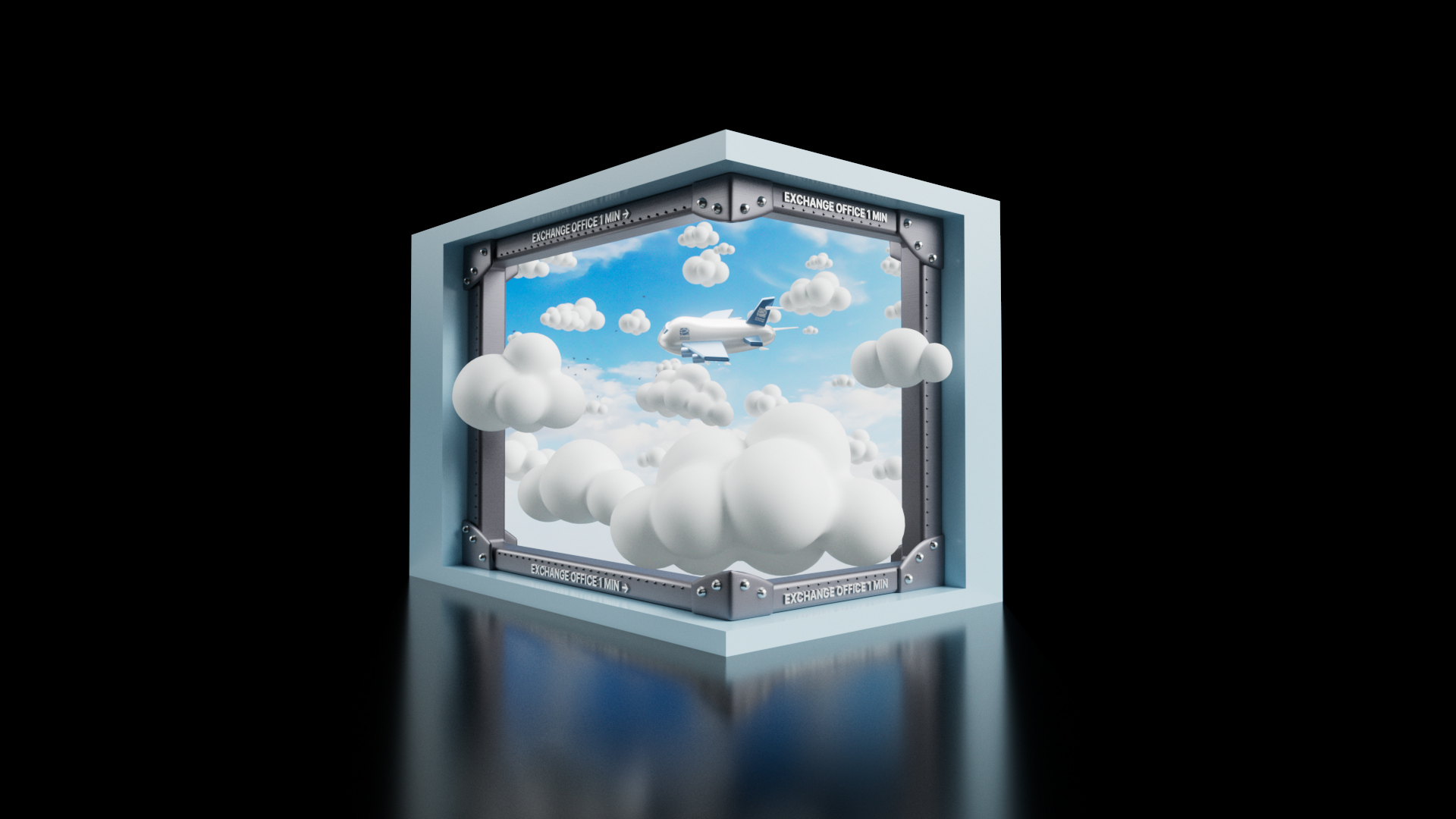
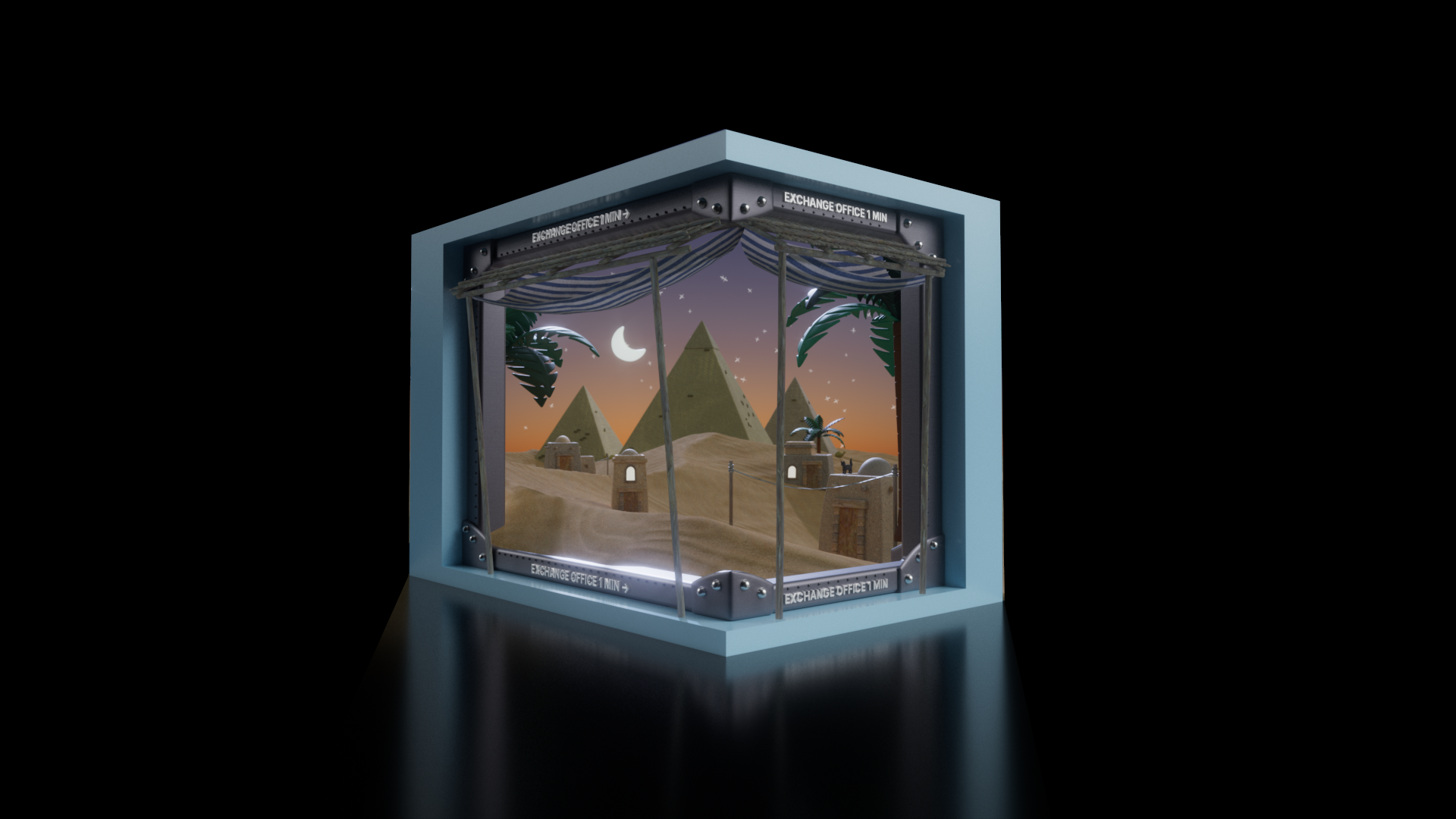
Global Exchange runs a currency exchange desk at Madrid-Barajas T4, behind a screen that wraps around a ninety-degree corner at street level. They wanted objects to appear to step out of it.
Anamorphic screens usually rely on two things: a viewer standing at a comfortable distance, and a geometry that helps the illusion along. This one offers neither. The corner breaks the surface, and the pedestrian eye-line leaves a narrow window where the effect fully resolves. Designing for that window rather than pretending it wasn't there was a important part of the job.
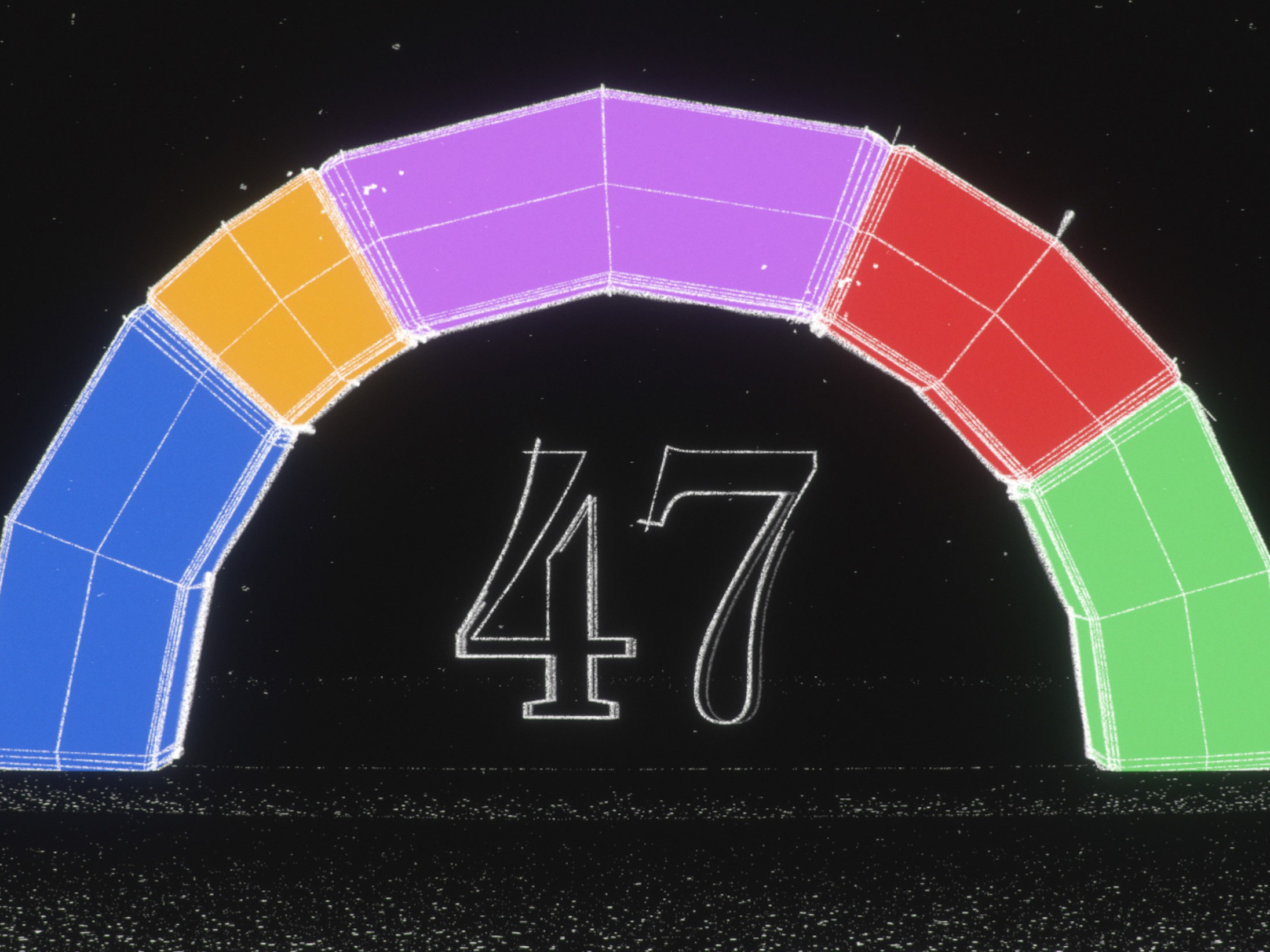
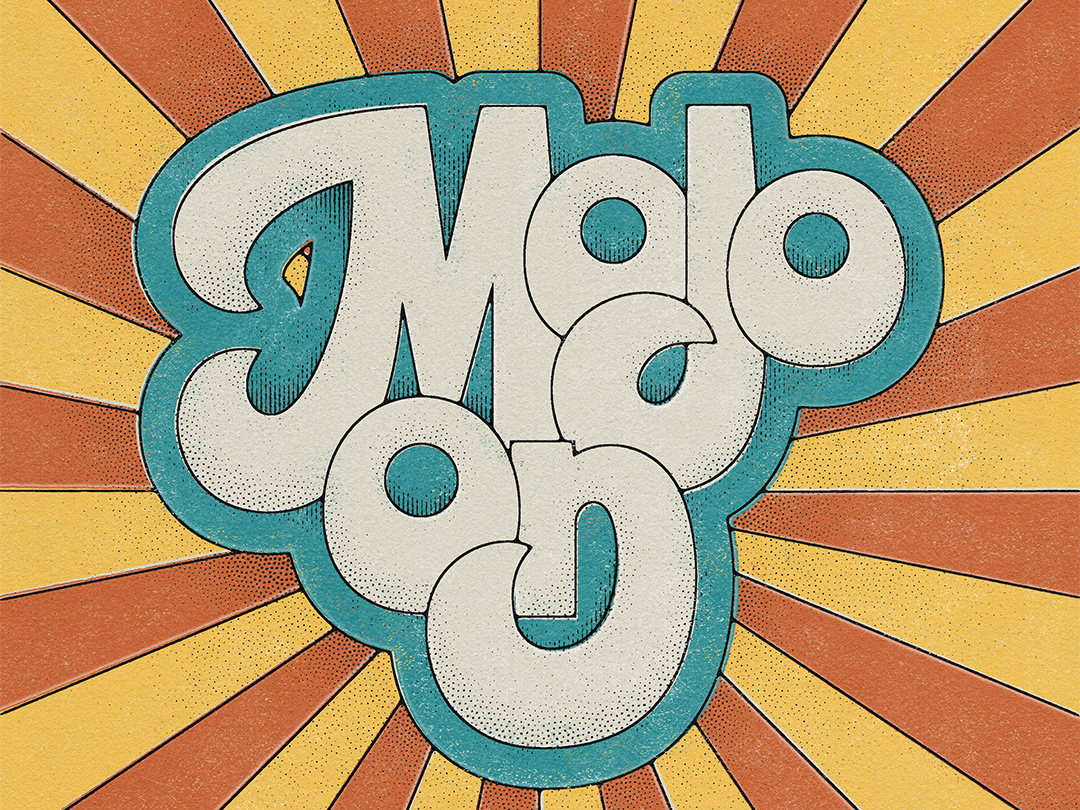
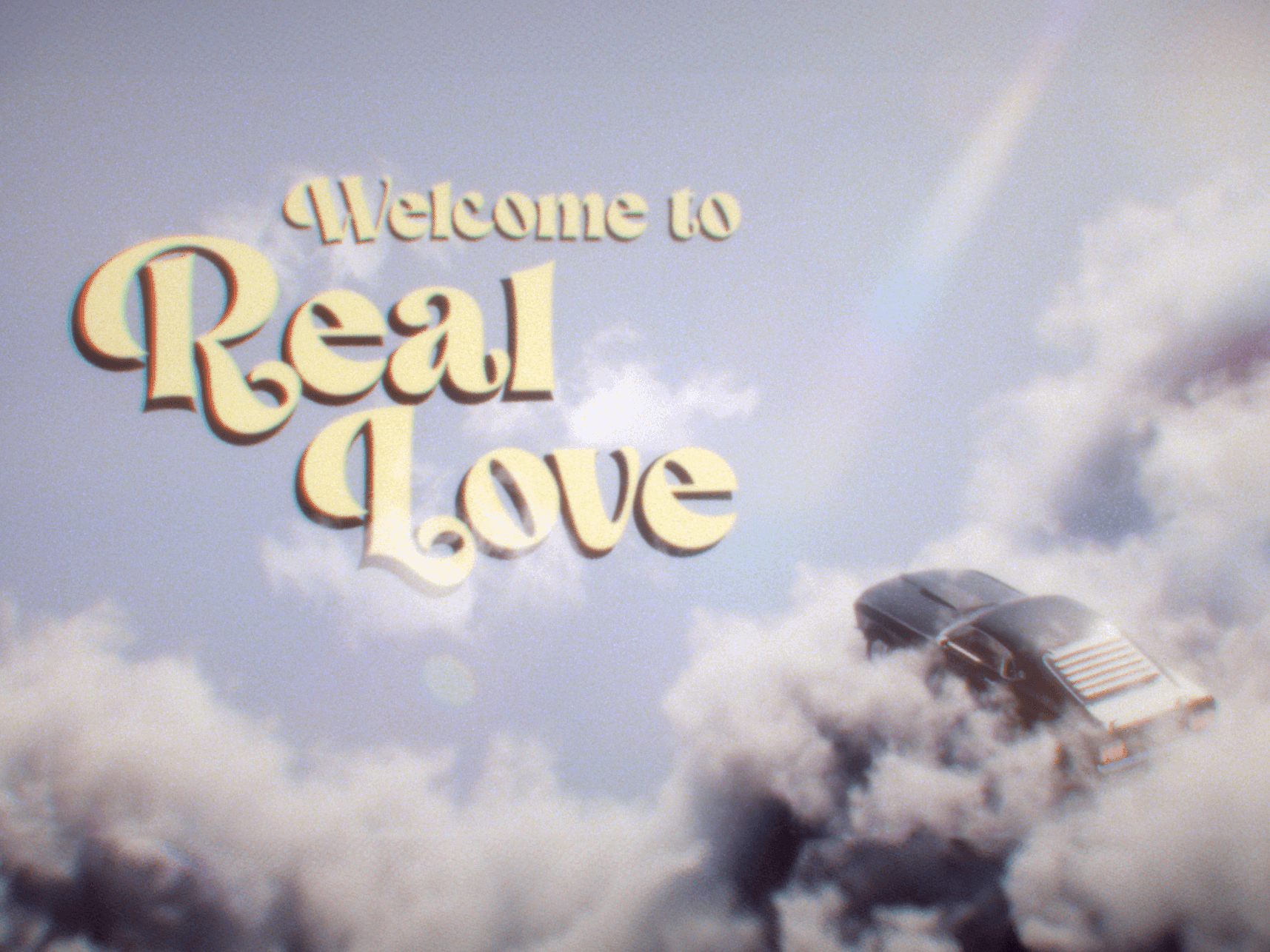
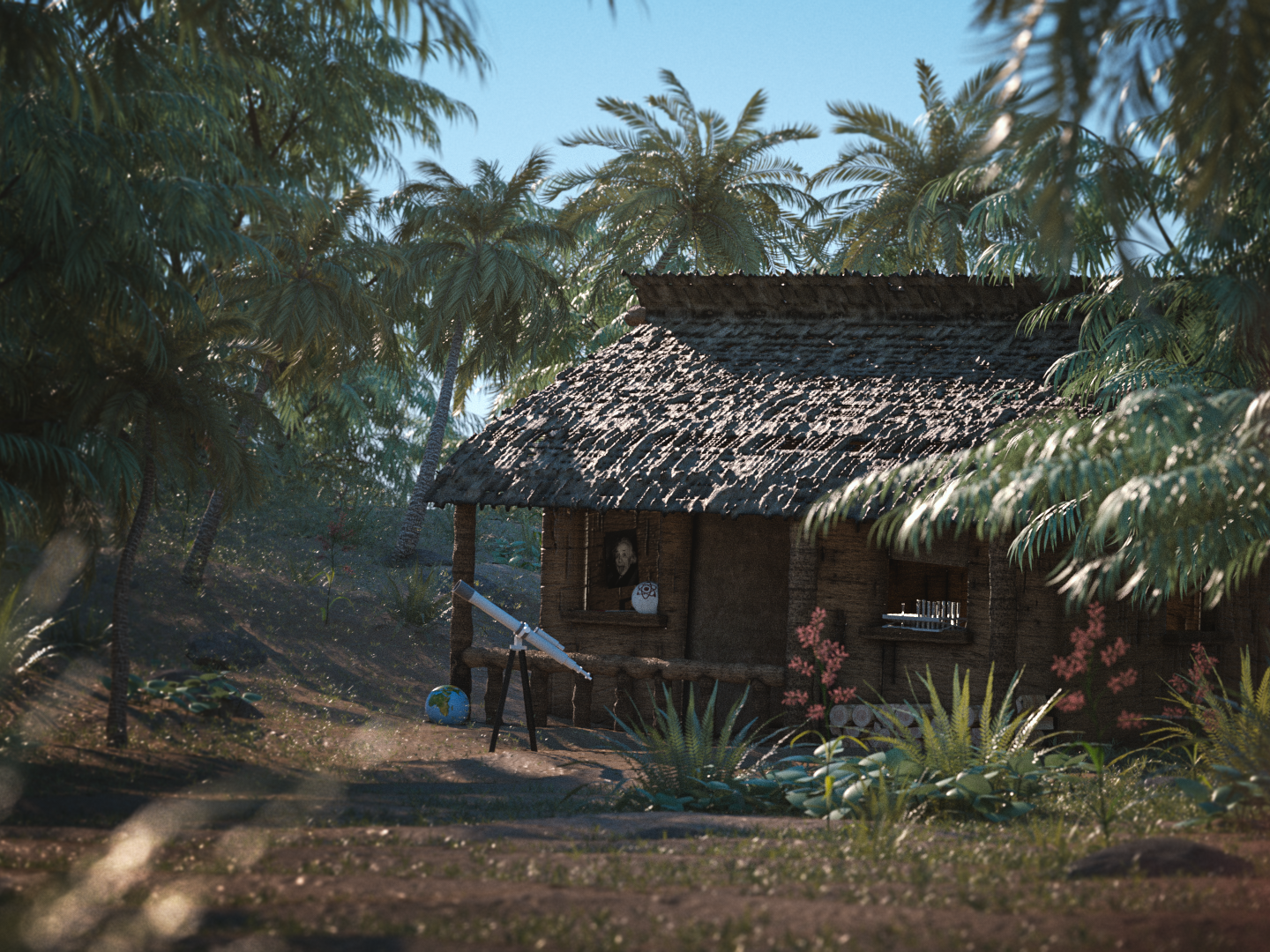
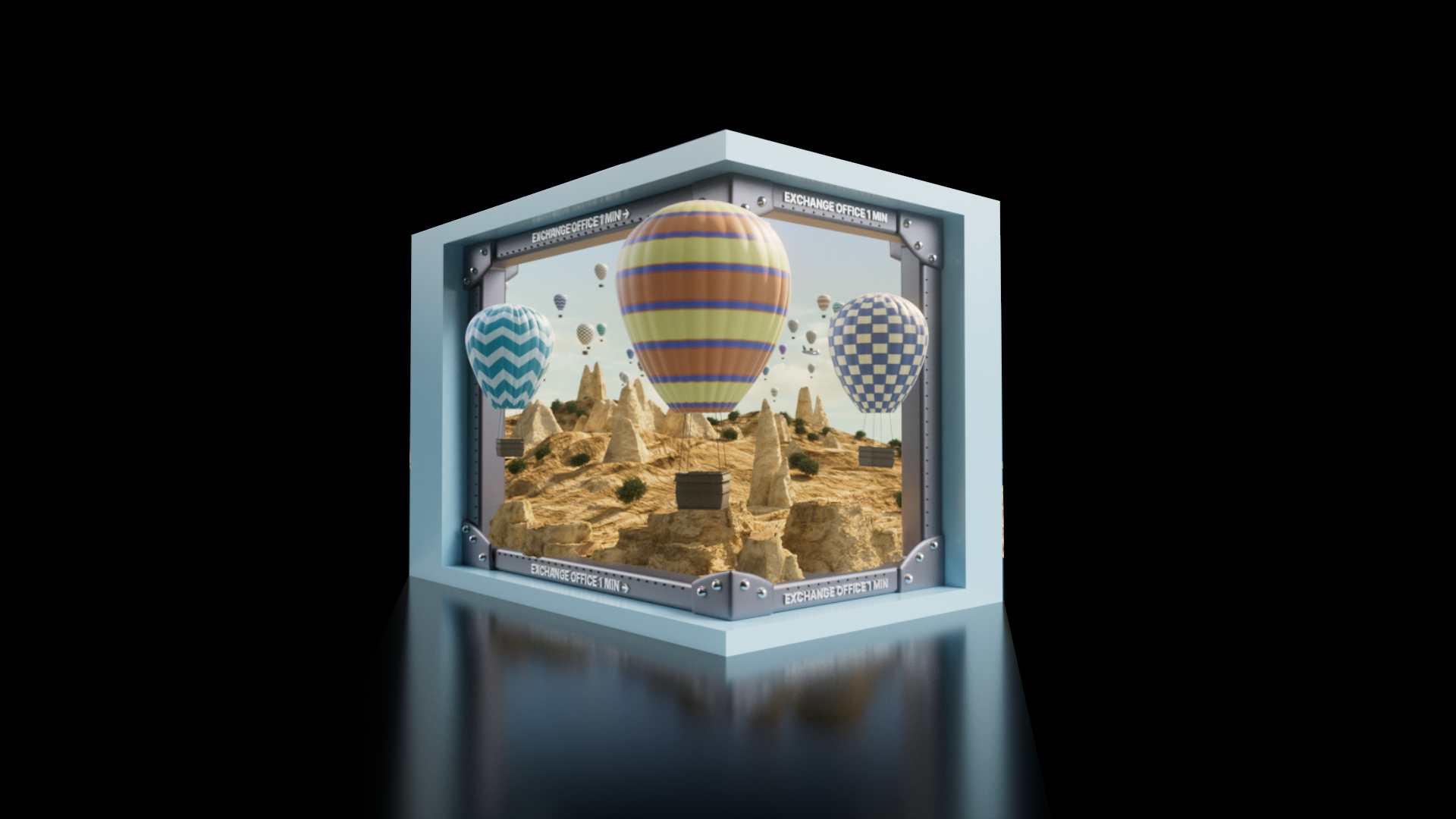
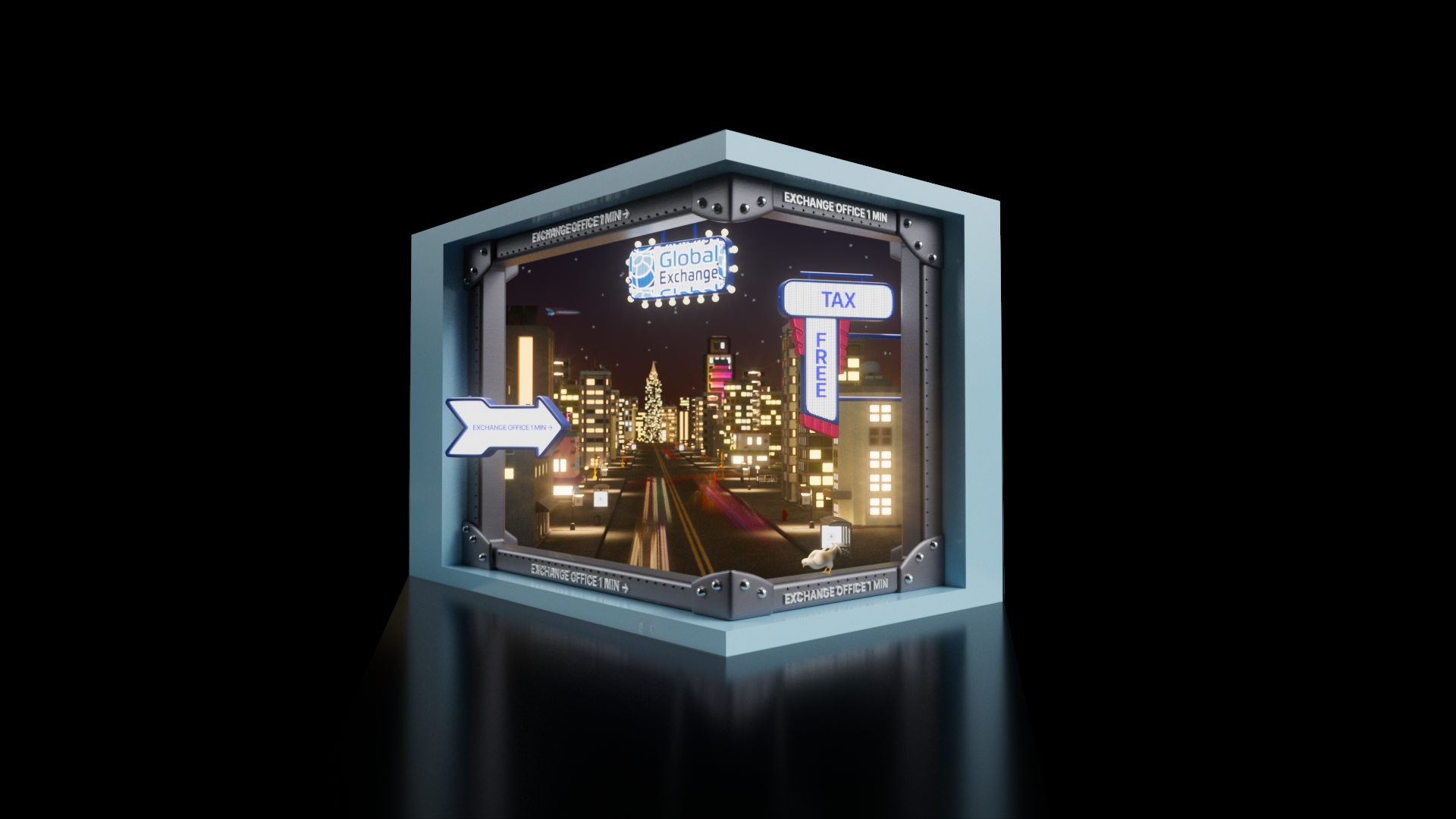
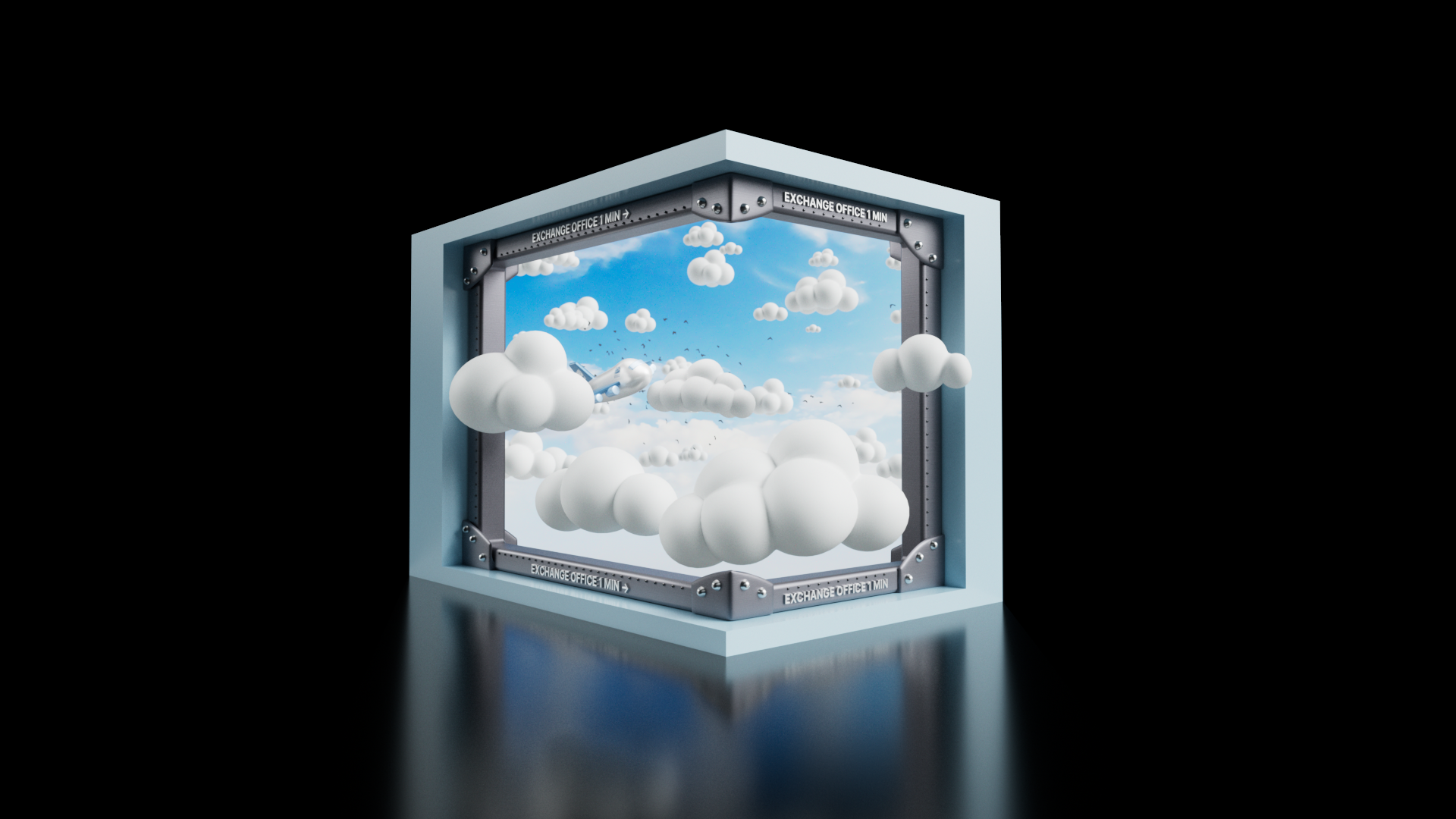
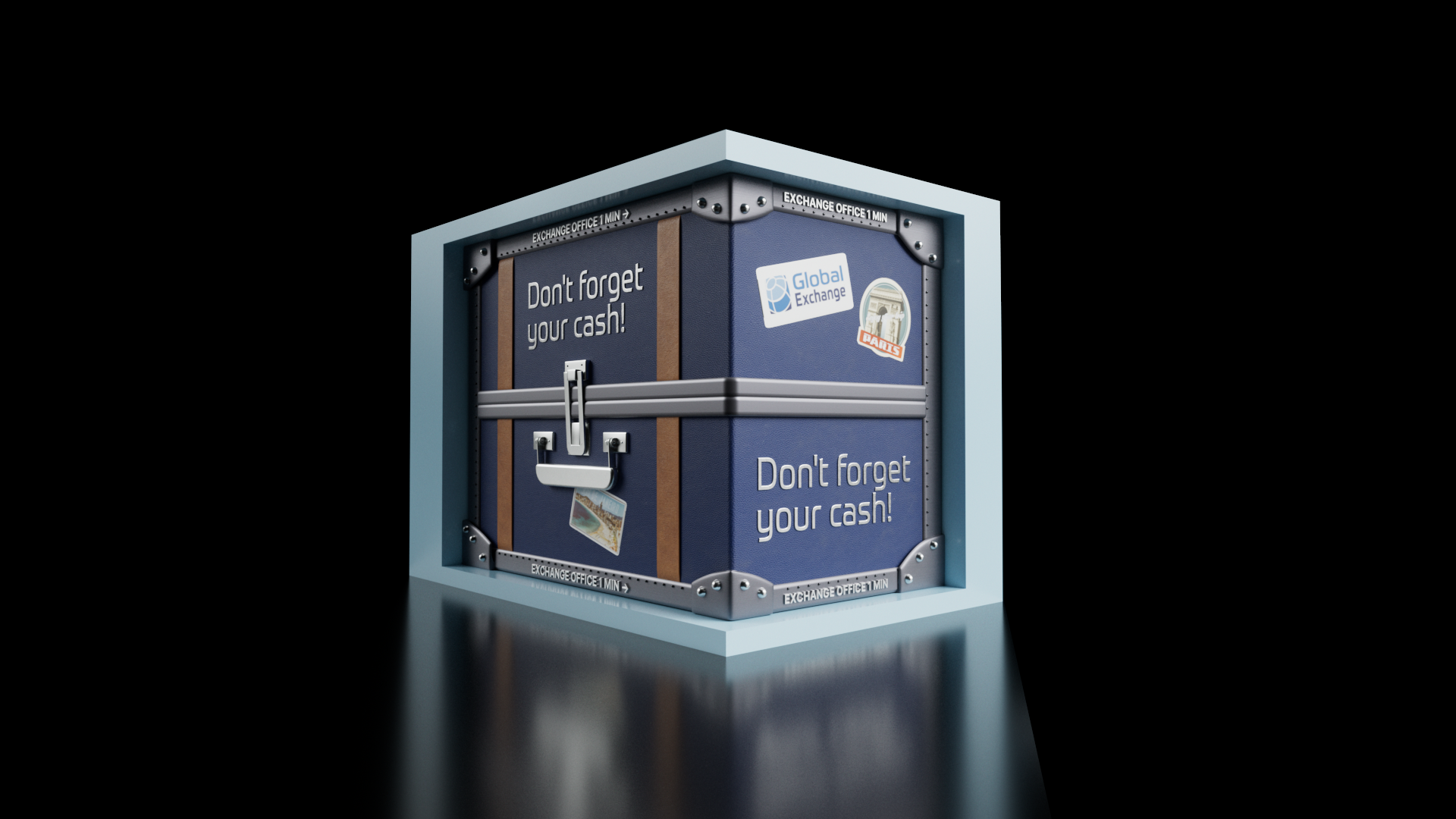
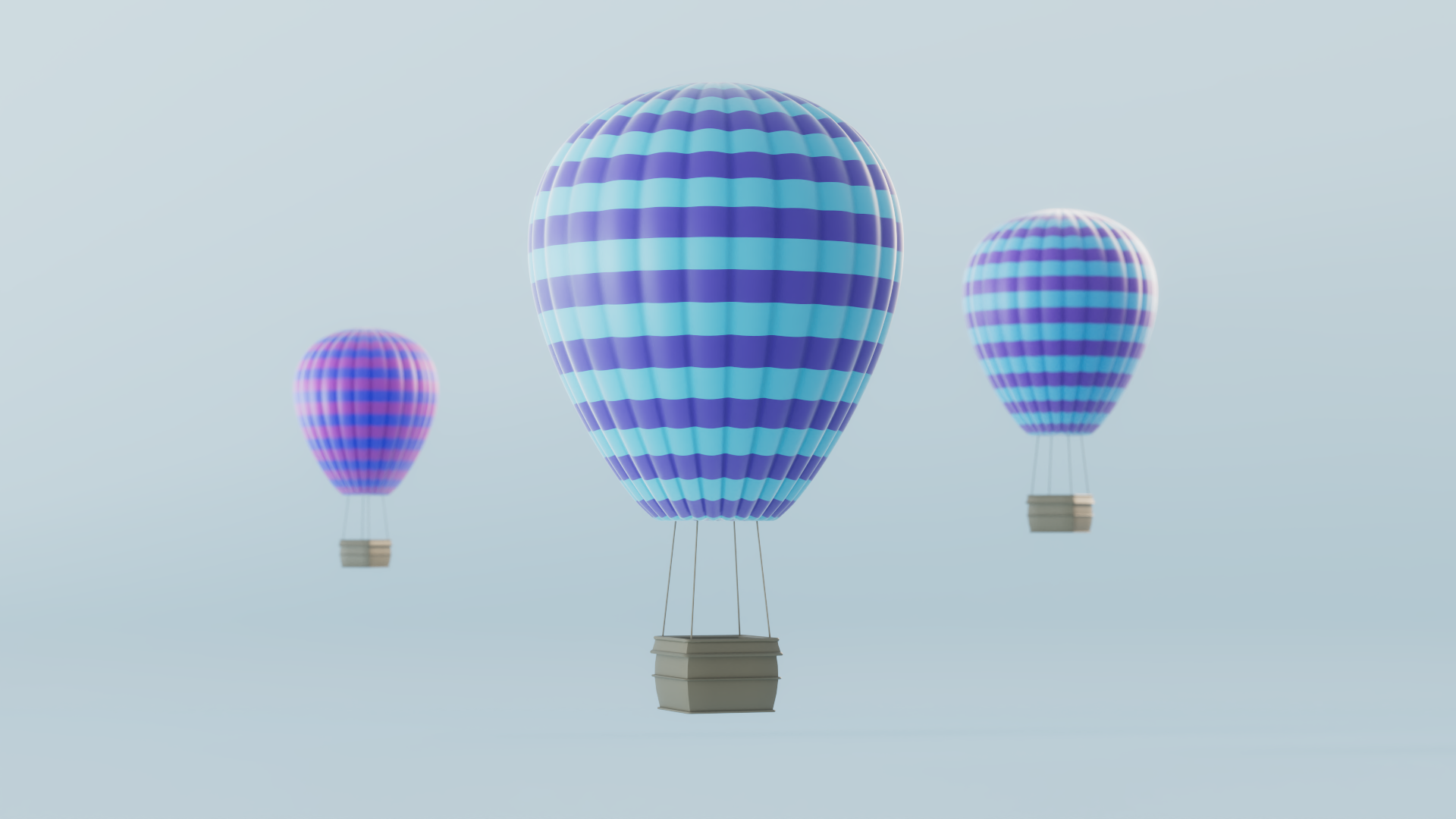
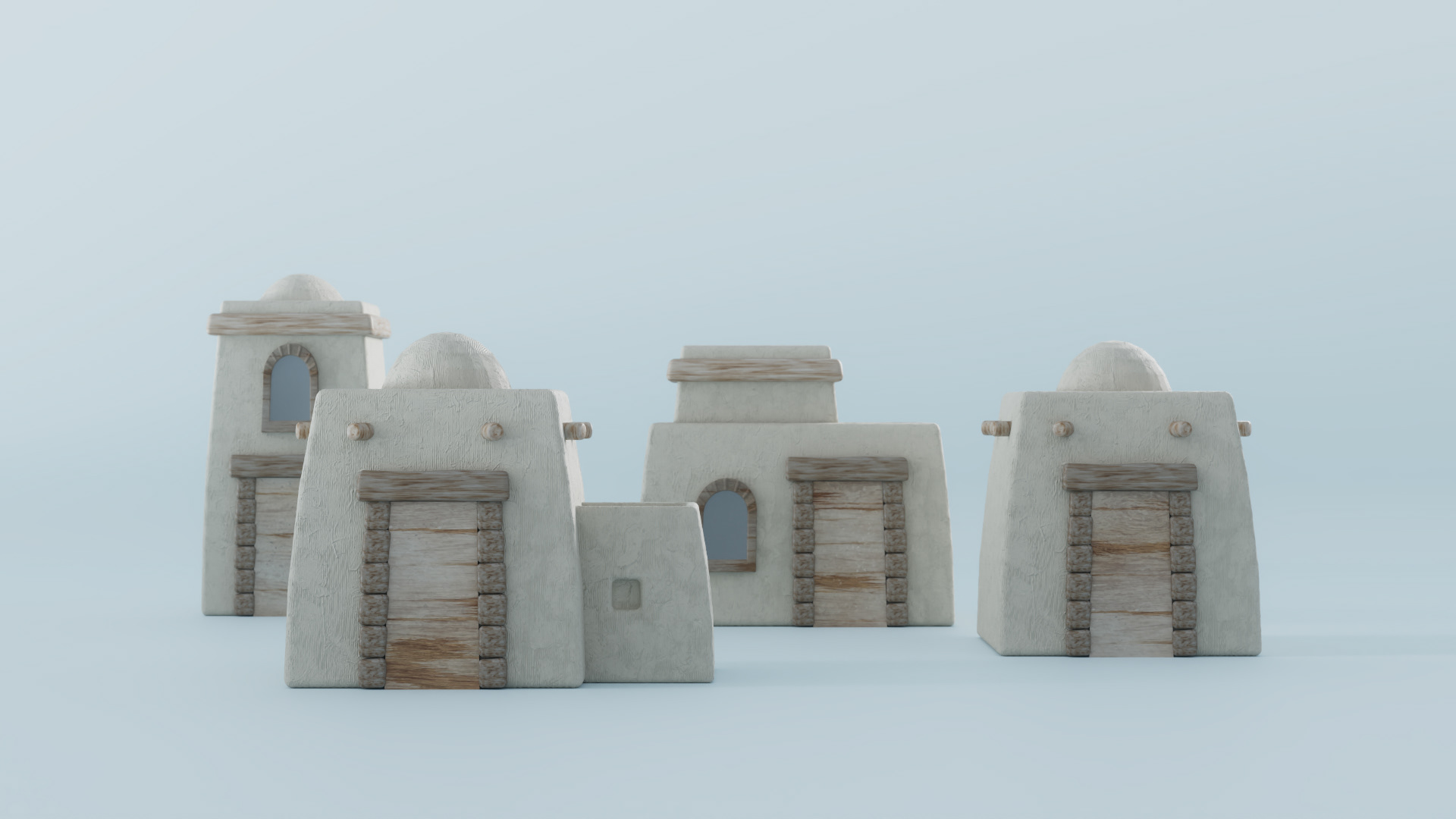
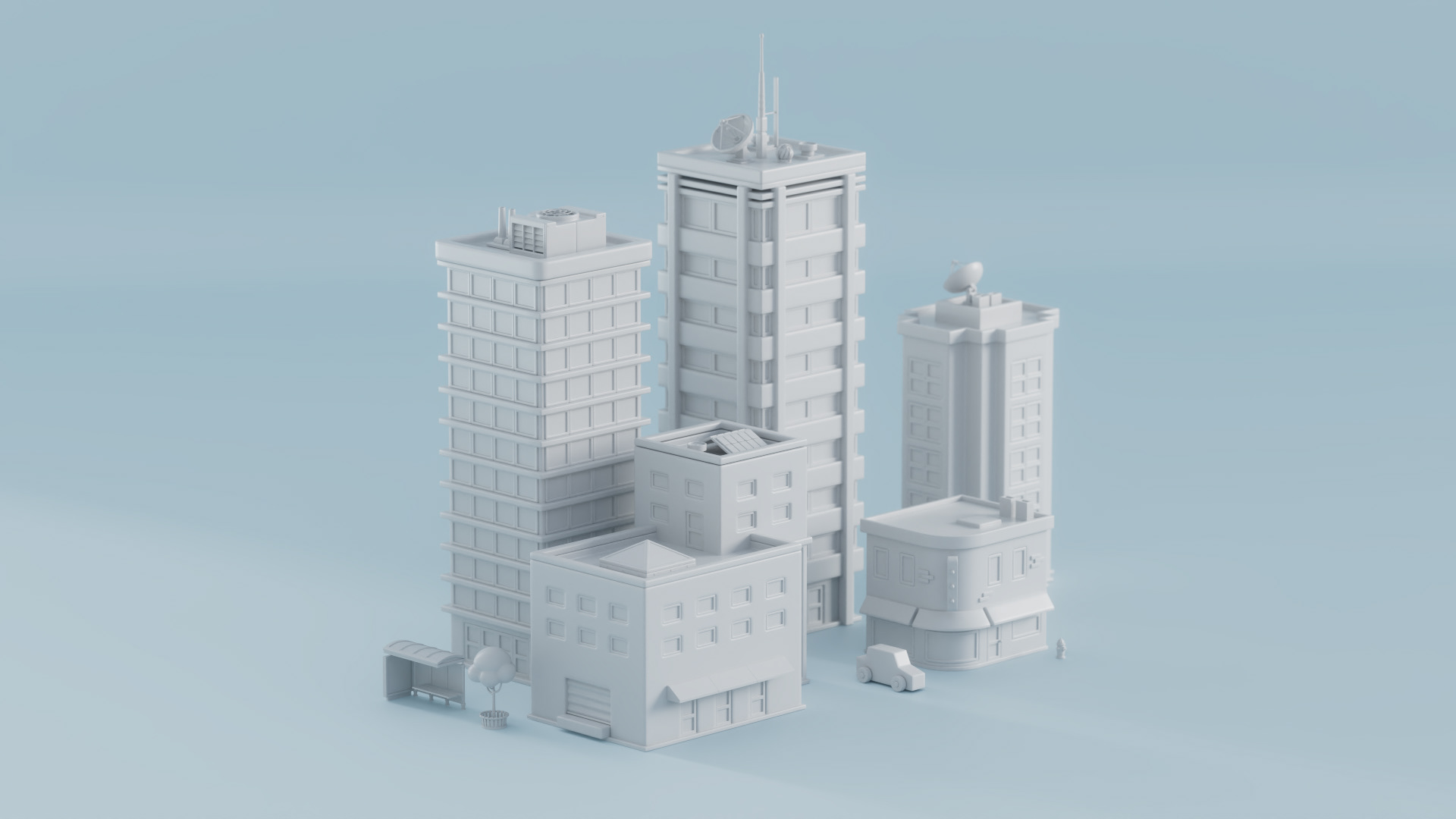
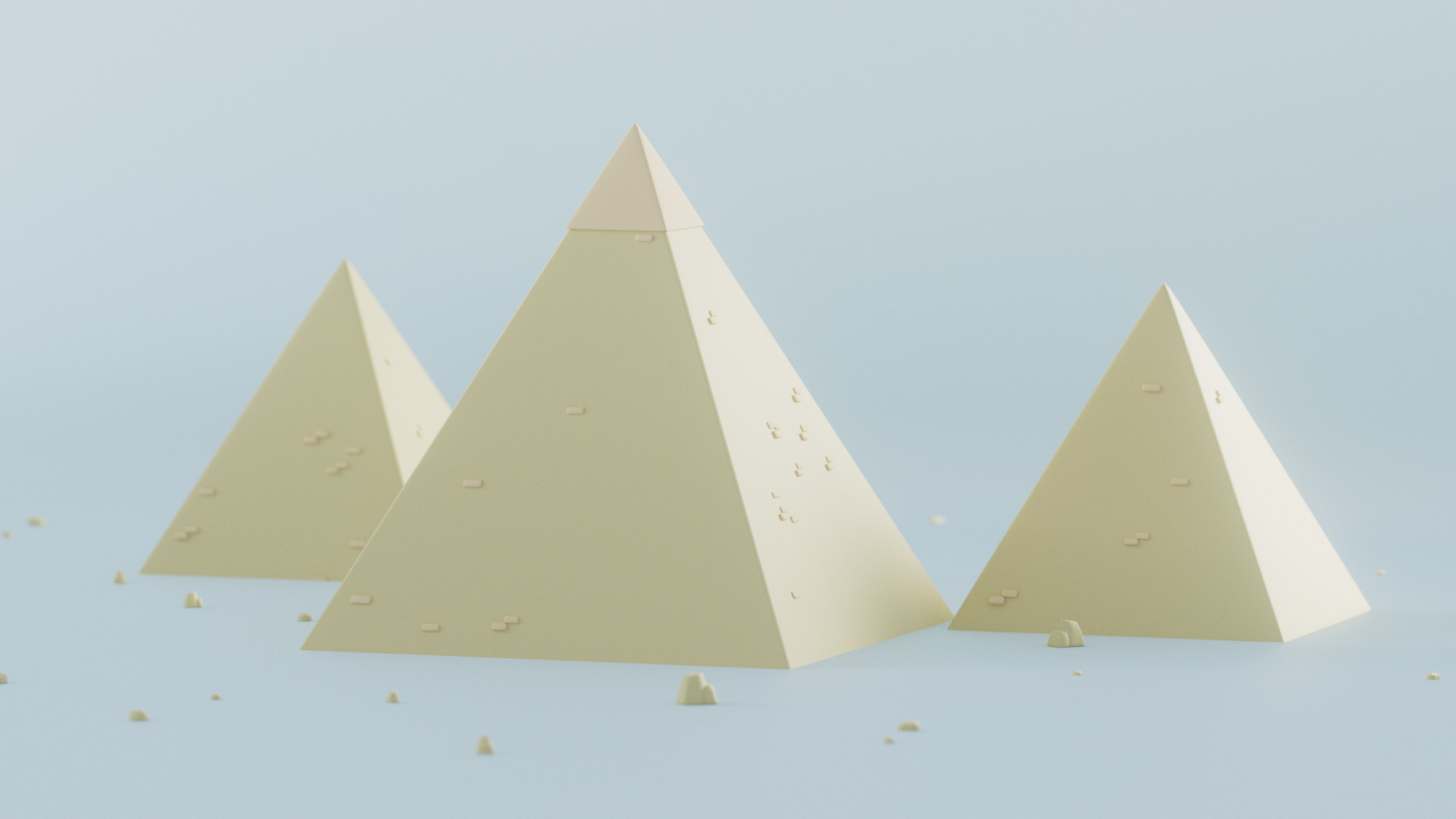
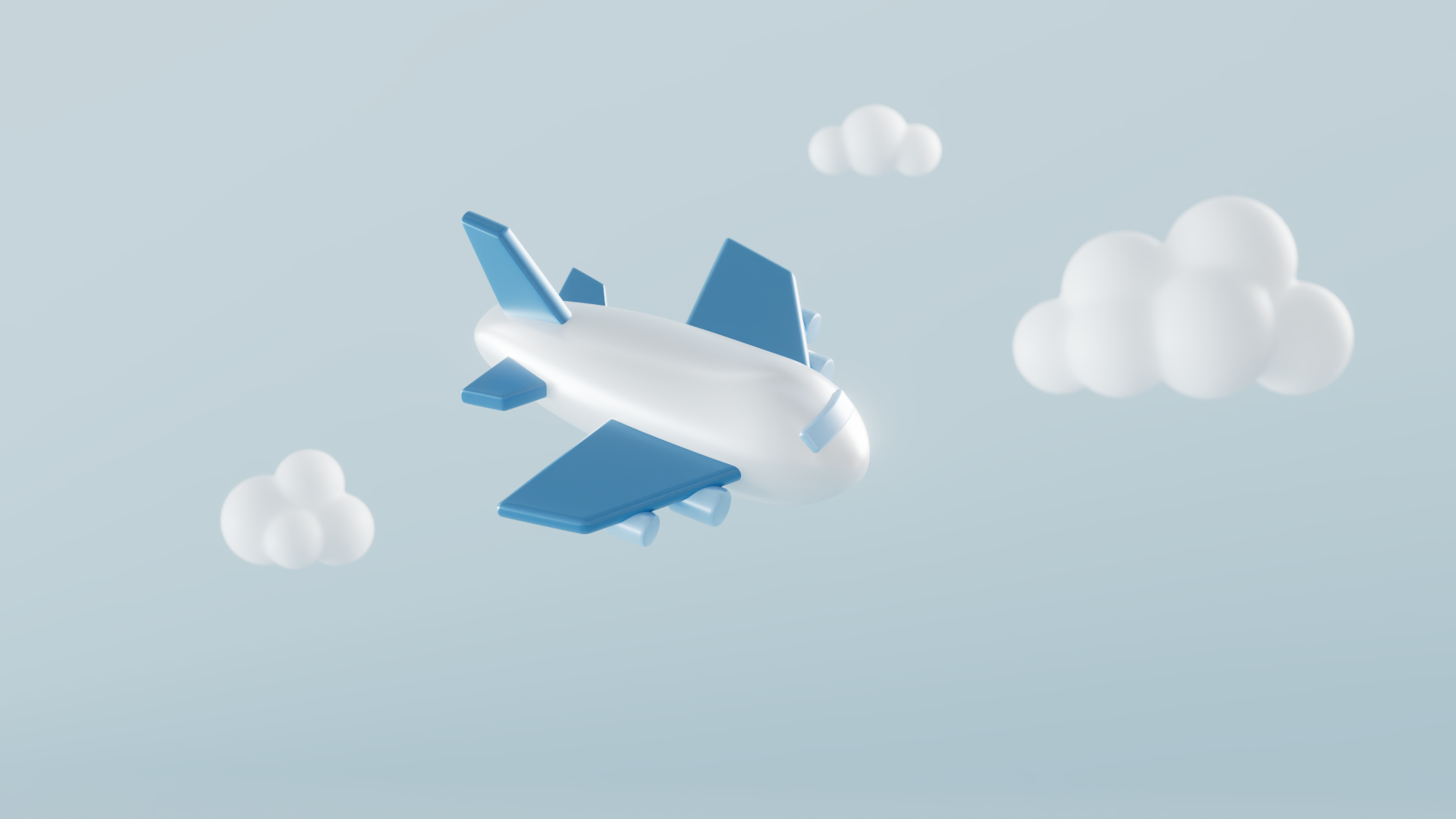
I designed, modelled, textured and animated every 3D element in two campaigns for this screen. The first leaned towards realism; the second moved into a lighter, toy-like register. In both, the scenes rotate on themselves, carrying a message or pointing the way to the store, always circling back to the idea of travelling.
The pieces ran on site at T4, and people stopped to photograph them.
Process & Techniques
Underneath, the technique is a camera projection. What makes it work is precision.
It starts by modelling the actual screen from the client's specifications and mapping its UVs, so the surface in the scene behaves exactly like the surface in the terminal. From there, a series of tests to find where the virtual camera has to sit for the projection to resolve from a pedestrian's point of view — the one position the whole piece is designed around.
The 3D scene is built and rendered inside that space, projected through that camera, and baked back onto the modelled screen as an animated texture.
What comes out is a distorted image. From anywhere else it means nothing. From that one exact spot, it becomes an object floating out of a wall.


Credits
3D Design, Modelling, Texturing & Animation: Alberto Martín Paz @am.paz_
3D Assistant: Jesús Rivas @
Client: Global Exchange / Eurodivisas
Thanks!
.v.(^.^).v.